


Skip Navigation
About NASALatest NewsMultimediaMissionsMy NASAWork For NASA

Intelligent Systems Division

+ Home + Organization + News + Research Areas + Publications + Software

News

OCAMS Project Equipment Review Meeting

Ames researchers developing the Orbital Communications Adapter Mirroring System (OCAMS) participated in the seven-year equipment replacement (OCA ER) review meeting, as part of the certification process for deploying OCAMS in the OCA backroom of Mission Control at Johnson Space Center (JSC) in the next 4–9 months.

The OCA ER System Functional Design Review (SFDR) was presented March 17, 2008 by the MSOC (Lockheed-Martin) team to the JSC Mission Operations Directorate (MOD). As a result of the four-hour presentation, the OCAMS team has submitted 13 Review Item Dispositions (RIDs) to modify the OCA operations and equipment design. The RIDs focus on hardware, software, networking, concepts of operations, and security issues that OCAMS will change in the OCA backroom. These RIDs are scheduled to be incorporated within a month by MSOC to produce the OCAMS SFDR. At that time, the OCAMS preliminary service request is expected to mature to SR status and become part of the OCA equipment replacement process scheduled for completion within a year.

The path to deployment of OCAMS will require enhanced processes for testing and system modification. These enhanced processes will enable testing OCAMS and other advanced technology that integrates and partially automates communication across organizational lines. The OCAMS team has been contributing to the solution of testing and security problems for next-generation mission operations systems.

The OCAMS team also spent two days observing and documenting OCA backroom observations to prepare for automation of the archiving and notification functions of the OCA Officer. Discussions were also held about additional opportunities for OCAMS-like systems in MOD to facilitate reduction in International Space Station (ISS) operations costs of 30% by 2012.

BACKGROUND: The ISS OCA Officer is responsible for manually uplinking and downlinking all files to and from the ISS in the OCA backroom at JSC. These files include schedules, procedures, commands, e-mail, photographs, health data, newspapers, etc. Computer scientists in the Intelligent Systems Division of NASA Ames, within the Work Systems Design & Evaluation Group, have studied and simulated OCA work practices in collaboration with the OCA team to identify possible process improvements. Using statistics generated from the Brahms simulation model, the team designed and simulated an agent-based workflow system that automates the process of creating a ground-based replica of the ISS file system (the MirrorLAN). Simulation statistics predict a reduction in mirroring time from 6% to .6% of the OCA Officer’s shift. Using the Simulation-to-Implementation engineering method, Brahms agents were then converted into the run-time tool OCAMS. Using the Brahms Virtual Machine, OCAMS agents manage the workflow on multiple computers and servers using secure communications provided by the Brahms Collaborative Infrastructure. The tool also automatically writes large parts of the OCA Handover Log.

NASA PROGRAM FUNDING: OCAMS is funded as the OCA Mirroring System (OCAMS) ITA 9277 between JSC’s MOD and the Ames Intelligent Systems Division. The Collaborative Infrastructure has been funded by the Exploration Technology Development Program (A4O)

COLLABORATORS: Tony Bruins (JSC), Chris Buckley (JSC), Tim Hall (JSC), Deborah Hood (JSC/USA), Brian Anderson (JSC), Chin Seah (Code TI, SAIC), Mike Scott (Code TI, Perot Systems), Ron van Hoof (Code TI, Perot Systems), and other OCA officers

Contact: Bill Clancey, Maarten Sierhuis

**************

Prognostics Consortium Spring Review

Kai Goebel attended the Center for Advanced Life Cycle Engineering (CALCE) Prognostics and Health Management (PHM) Consortium Spring Review March 20–21 at the University of Maryland. NASA Ames sponsors a project at CALCE investigating failure precursors for Insulated Gate Bipolar Transistors. In this project, first, a failure modes, mechanisms, and effects analysis was performed. Specifically, the time-dependent dielectric breakdown in the oxide layer was identified as a critical failure mechanism. Then, accelerated testing for critical failure mechanisms identified was carried out by simultaneously subjecting the oxide to high temperatures and electric fields. It was found that the oxide does indeed break down, which results in measurable shifts of the voltage thresholds and the transconductance. Degradation analysis of stressed devices will be performed to correlate observed changes in electrical parameters with device degradation.

BACKGROUND: The PHM Consortium performs research and development on the application of prognostics and health management to complex electronic devices, products, and systems of systems. Insulated Gate Bipolar Transistors (IGBTs) are power transistors that combine the fast switching speed of MOSFETs with the high current capability of bipolar transistors. IGBTs are used in avionics for power conversion and speed control such as flight control actuators. Health management solutions are needed for critical applications that affect safety of operation.

NASA PROGRAM FUNDING: ARMD/AVSP/IVHM

TEAM MEMBERS, COLLABORATORS and CUSTOMERS: Kai Goebel NASA), Jose Celaya (RIACS), Phil Wysocki (NASA), Greg Sonnenfeld (MCT), Prof. Michael Pecht (CALCE, UMD), Myra Torres (CALCE, UMD), Diganta Das (CALCE, UMD), Nishad Patil (CALCE, UMD)

**************

PathFinder Included in Google Summer of Code

Java PathFinder (JPF) has been included in the 2008 Google Summer of Code (GSoC). Under this program, Google offers student developers stipends to write code for various open source projects. Over the past three years, GSoC has brought together over 1500 students and 2000 mentors from 90 countries worldwide. The PathFinder team will define the set of tasks the Google funding would support.

BACKGROUND: JPF is a tool suite for software model checking of Java bytecode programs. It is used as a replacement of the “java” command, to execute applications in a variety of ways in order to find program defects like deadlocks and unhandled exceptions. JPF can systematically explore different thread scheduling sequences, and supports variation of test data with user-defined heuristics. There are various extensions for guided model checking, symbolic execution, compositional verification, and numerical analysis.

JPF was developed by the Robust Software Engineering (RSE) group, and open sourced under the NASA Open Source Agreement license in April 2004. The software can be obtained from http://javapathfinder.sourceforge.net

NASA PROGRAM FUNDING: Exploration Systems Mission Directorate, Exploration Technology Development Program

COLLABORATOR: Google, Inc.

**************

Prognostics Testbed Paper Presented

Bhaskar Saha, lead researcher with the Battery Prognostics project of the Prognostics Center of Excellence presented a paper titled “Uncertainty Management for Diagnostics and Prognostics of Batteries using Bayesian Techniques” at the 2008 IEEE Aerospace Conference, held at Big Sky, MT.

The Battery Prognostics project develops algorithms that predict end-of-charge and end-of-life for batteries (prognosis) based on rapid assessment of state-of-charge (SOC) and state-of-health (SOH) (diagnosis), coupled with anticipated environmental and load conditions.

BACKGROUND: Within the IVHM project, health management techniques are explored for complex subsystems in aeronautics. Specifically, prognostics techniques, considered the Achilles heel of condition based maintenance, are explored as game changers for advanced health management concepts by incorporating uncertainty management techniques.

Batteries form a core component of many machines and are often critical to the well-being and functional capabilities of the overall system. Failure of a battery could lead to reduced performance, operational impairment, and even catastrophic failure, especially in aerospace systems. An efficient method for battery monitoring would greatly improve the reliability of such systems.

NASA PROGRAM FUNDING: ARMD/AVSP/IVHM

TEAM MEMBERS AND COLLABORATORS: Bhaskar Saha (MCT) and Kai Goebel (NASA)

*Invited Panelist at Aerospace Conference*

Dr. Jeremy Frank participated on the invited panel “New Automation Software for Space Mission Operations” at the IEEE Aerospace Conference. Dr. Frank described the challenges in building mission operations tools for long-duration space missions, using recent changes in International Space Station S-Band communication operations and solar panels as case studies. The case studies highlight the need for automation in software tools for mission operations.

BACKGROUND: The Automation for Operations (A4O) project is an ETDP-funded project with members from NASA’s Johnson Space Center (JSC), Langley Research Center (LaRC), Ames Research Center (ARC) and and Jet Propulsion Laboratory (JPL), as well as SRI, United Space Alliance (USA) and TRACLabs (a JSC contractor). The project develops trusted adjustable automation technology to advance the state of the art in mission operations, crew self-scheduling, robotic operations, and systems operations for lunar outpost and surface infrastructure operations.

NASA PROGRAM FUNDING: This work was funded by the NASA Exploration Technology Development Program.

**************

*Conference Poster Presentation*

Dr. Jeremy Frank presented a poster on “The Challenge of Evolving Mission Operations Tools for Manned Spaceflight ”at the International Symposium on Artificial Intelligence, Robotics, and Automation in Space. The work describes the challenges in building mission operations tools for long-duration space missions, using recent changes in International Space Station communication (S-Band) operations as a case study. The case study highlights the need for reconfigurable and interoperable software tools for mission operations.

BACKGROUND: The Automation for Operations (A4O) project is an ETDP-funded project with members from JSC, LaRC, ARC and JPL, as well as SRI, United Space Alliance (USA) and TRACLabs (a JSC contractor). The project develops trusted adjustable automation technology to advance the state of the art in mission operations, crew self-scheduling, robotic operations and systems operations for lunar outpost and surface infrastructure operations.

NASA PROGRAM FUNDING: This work was funded by the NASA Exploration Technology Development Program.

**************

Prognostics for Electronics Project Review

On Friday, February 22, Minoo Dastoor, Chief Technical Officer of the Innovative Partnerships Program (IPP) Headquarters, held a review of the Prognostics Center of Excellence’s IPP project “Electronic Prognostics for Critical Avionics Systems.” The project seeks to improve digital electronic system health awareness and prediction through development of prognostic techniques and processes for avionics systems, consisting of an array of digital electronic boards. The aging models and prognostics algorithms developed under this project will predict remaining life of select faulted electronic components in avionics (such as dedicated MOSFETS), significantly improving safety, reducing maintenance cost, and minimizing delays and cancellations.

Dastoor’s charter is to interface with the Mission Directorates and communicate their needs to IPP Offices. Dastoor reviewed all the proposals for IPP Seed Fund Proposals and selected the short list that was forwarded to the Mission Directorates for final selection. The propose of this visit was to meet with the PIs of the IPP Seed Fund Projects and obtain update on the projects.

BACKGROUND: Avionics systems play an ever-increasing critical role in on-board, autonomous functions for vehicle controls, communications, navigation, and radar systems. The application of IVHM to avionics systems will boost in-flight performance, reduce maintenance costs, and ultimately improve aircraft reliability. Flight and ground crews require health state awareness and prediction technologies that can accurately diagnose faults, anticipate failures, and predict the remaining life of these embedded electronics.

NASA PROGRAM FUNDING: ARMD/AVSP/IVHM

TEAM MEMBERS: Kai Goebel (NASA), Bhaskar Saha (MCT), Abhinav Saxena (RIACS), Edward Balaban (NASA), Jose Celaya (RIACS), Sankalita Saha (RIACS), Anish Kumar (DeAnza Internship Program), Joe Calderon, Phil Wysocki (NASA), Scott Poll (NASA)

**************

Stanford U.S. Space Exploration Policy Workshop

William J. Clancey (Chief Scientist, Human-Centered Computing) was an invited participant at the Stanford Space Exploration Workshop, held at Stanford University, February 12-13, 2008. Clancey’s presentation, “Voyages of Discovery with Human and Robotic Systems,” reviewed NASA research on human-robotic systems for surface exploration, including Mobile Agents at the Mars Desert Research Station and Desert-RATS, field science ethnography to determine requirements for exploration support, and lessons learned about human-centered computing from the Mars Exploration Rover (MER) project.

The presentation emphasized that MER is a new kind of exploration system that must be understood for what it is—not a “robotic geologist,” but a programmable mobile laboratory by which scientists are exploring Mars. Rather than asking abstract questions such as “How many robots can a person control?” the MER mission leads us to ask, “How can we increase the number of scientists using each rover? And how can we reduce the number of engineers controlling each rover?” Multiple-month campaigns of exploration (e.g., Spirit’s 18 months at Home Plate covering only 100 square meters) are providing metrics with strategic implications for exploring the entire planet. Furthermore, MER shows how rovers, much more than interplanetary probes, provide a sense of presence that unifies the exploration effort, captured by the expression “one instrument, one team.”

Clancey participated in the panel “Humans and Robots in Exploration,” moderated by Peter Friedland (independent consultant); other panelists included Jim Bell (Cornell, MER PanCam specialist) and Jeff Plescia (APL/John Hopkins, planetary geologist). The panel responded to these questions: “What is the inherent cost/benefit ratio of robotic and human space exploration today? What technology should NASA invest in to advance robotic science and/or human field science? Do you think the mix of humans and robots will change over the next 25 years or so of space exploration?”

BACKGROUND: The two-day workshop, co-sponsored by The Planetary Society and the Department of Aeronautics and Astronautics at Stanford University, was an invitation-only meeting of 45 space exploration experts, including top scientists, former NASA officials, and leading aerospace industry executives. Eight of the attendees were former astronauts.

The group gathered privately to engage in a frank, wide-ranging discussion of the vision for space exploration and the policy options facing the new administration that will take office in January 2009. Topics discussed by the attendees in a series of 90-minute panels included scientific exploration, earth science and climate change, lunar exploration, sending humans to Mars, alternate human exploration destinations, humans versus robots for exploration, vehicles for accessing low-earth orbits and beyond, emerging entrepreneurial space activity, and international collaboration. For the workshop agenda and a list of attendees, see http://soe.stanford.edu/research/evlist.html.

NASA PROGRAM FUNDING: NASA funding was not used to support this event.

COLLABORATORS: NASA Ames—Chris McKay and Russ Kerschman; JPL—Brian Muirhead (Chief Architect, CxP)

**************

Small Spacecraft Team Prototype Vehicle Flight Tests

The Small Spacecraft Common Bus team recently completed a series of successful prototype vehicle flight tests. The vehicle utilized a cold gas propulsion system to fly untethered for approximately five seconds. During this time, the vehicle demonstrated that it was able to maintain control of both position and orientation. Vehicle telemetry was monitored and recorded wirelessly via commercially available and flight-proven Ground Data Systems software.

The Small Spacecraft Software/Avionics team provided the onboard flight software running on flight-like avionics. The team utilized an infrastructure and processes they have been developing for the generation of flight software for small spacecraft missions. The basis of these processes is to employ automatic software generation from system dynamics modeling tools such as Mathworks Simulink. These techniques have been successfully used in a number of space and flight applications, and have the potential to greatly improve software development cost, time, and reliability. Successful completion of this milestone demonstrates the team’s ability to utilize this technique for generating flight software. Roughly 85% of the flight software was automatically generated.

The team is continuing to use this test platform for refining the development infrastructure. This work will also be utilized in the recently announced Lunar Atmospheric and Dust Environment Experiment (LADEE) mission.

NASA PROGRAM FUNDING: Ames Small Spacecraft Common Bus

PROJECT TEAM: Howard Cannon, Craig Pires, Scott Christa, Karen Gundy-Burlet, Greg Limes, Greg Dorais, Mark Branson, Nilesh Kulkarni, Danilo Viazzo, Jeff Brown, Amanda Kelly, Mike Logan

**************

Solar Array Constraint Engine Delivered for Testing

A new version of the Solar Array Constraint Engine (SACE) has been delivered to Johnson Space Center’s (JSC) Mission Operations Directorate (MOD) for further testing. Major enhancements in this version focus on solar array plan generation, and include: (1) separation of plan configuration and generation into separate phases, so that the user can modify the configuration before proceeding with plan generation; (2) an improved algorithm for consolidating constraints and user restrictions during the solution of configurations that need to be merged during plan generation; (3) visual indication to the user of configurations merged during planning; (4) reporting of orbital-average power availability for the generated plan, taking into consideration the actual configuration/orientation of the arrays during each orbit; (5) display of eclipse and insolation timelines; and (6) display of the “time to hazard” for longeron shadowing, as line graphs on timelines.

This release of SACE also integrates with a new version of SOLAR, the power and trajectory modeling tool, with which it communicates to obtain the power availability. SACE now has a streamlined method for configuring where it can find the various resources. A document describing the various configuration options has also been delivered with this release.

BACKGROUND: As the International Space Station (ISS) nears completion, assessing the safety of different configurations of the solar panels has become a challenging task, requiring the analysis of constraints from many different sources (power, thermal, load, and environmental). As a result of this new challenge, a team from NASA Ames, JSC, and United Space Alliance created the solar array constraint engine (SACE) for use by station power, heating, articulation, and lighting control officers. SACE employs constraint reasoning and automated planning technology to determine the safety of the current configuration of ISS solar panels, assess the impact of future configurations, and create long-range solar panel plans that maximize safety.

NASA PROGRAM FUNDING: This work was funded by the NASA Exploration Technology Development Program and the Space Operations Mission Directorate.

**************

MOD XSearch Application Enters Final Testing Phase

A new server for the Mission Operations Directorate (MOD) Search Tools project was installed, configured, and loaded with software and data in preparation for the final stages of deployment testing at Johnson Space Center (JSC). The server will run Ames-developed software that indexes and cross-references operations documents and notes written by Mission Control Center (MCC) flight controllers. The indexing software works in conjunction with the XSearch application, to be released for use by flight controllers within the next few months.

BACKGROUND: XSearch is a new information management application that integrates with the MCC Web Tools system to enable search and linkage across multiple databases used by International Space Station and SpaceShuttle flight controllers. A primary function of XSearch is to allow flight controllers to search across three key tools that previously were isolated from one another: the chits system (used to store mission action requests), the flight notes system (used to store internal flight control team communications), and the MOD anomaly reporting system. A flight controller must currently search the three MCC tools separately; XSearch allows users to conduct a single search and get back a set of integrated results from all three tool databases. Additional databases are being considered to extend the search coverage of the system. In addition to search, the XSearch system provides two other important capabilities: cross-referencing and similarity detection. Work is currently underway to modify XSearch to combine search results from the NX-Search system, which provides search capabilities covering several other MOD databases.

NASA PROGRAM FUNDING: JSC Intercenter Task Agreement, funded by ESMD Constellation Mission Operations Project Office

COLLABORATORS: Rich Keller, Chris Knight, Dan Berrios, Mohana Gurram, Steve Lin, Cori Schauer, Lisa Faithorn (ARC); Tim Hall, Jenny Yang, James Hart, Jason Hadlock, Jon Shipman (JSC)

**************

EUROPA Released as Open-source Software

The Extensible Universal Remote Operations Planning Architecture (EUROPA) has been released as open-source software under a NASA Open Source Agreement (NOSA). In addition to the software and documentation, two planning problem descriptions motivated by work performed on the Automation for Operations (A4O) project have also been released. One problem set is derived from the daily planning challenges faced by International Space Station (ISS) astronauts, the other is the daily planning problem faced by the medical staff running the human factors study for Johnson Space Center’s Flight Analogs Branch.

The release of EUROPA provides academics and students with the opportunity to learn from, and make use of, a sophisticated automated planning technology that is quite different from those being developed at universities. The release of the planning domains also provides academics and students with the opportunity to use highly realistic and relevant planning problems to drive their research.

BACKGROUND: XSearch is a new information management application that integrates with the Mission Control Center (MCC) Web Tools system to enable search and linkage across multiple databases used by ISS and Shuttle flight controllers. A primary function of XSearch is to allow flight controllers to search across three key tools that previously were isolated from one another: the chits system (used to store mission action requests), the flight notes system (used to store internal flight control team communications), and the Mission Operations Directorate (MOD) anomaly reporting system. A flight controller must currently search the three MCC tools separately; XSearch allows users to conduct a single search and get back a set of integrated results from all three tool databases. Additional databases are being considered to extend the search coverage of the system. In addition to search, the XSearch system provides two other important capabilities: cross-referencing and similarity detection. Work is currently underway to modify XSearch to combine search results from the NX-Search system, which provides search capabilities covering several other MOD databases.

NASA PROGRAM FUNDING: Exploration Systems Mission Directorate

**************

Collaborative Decision Environment Demonstrated to Disaster Responders

Francis Enomoto and Sandy Johan were invited to attend the 2007 Southern California Fire Siege Remote Sensing Workshop in Sacramento, February 12-13, 2008. The workshop, hosted by NASA, US Forest Service (USFS), and CAL FIRE, reviewed the remote sensing requirements of incident management teams and the products that were provided by NASA, USFS, military, and commercial providers during the October 2007 wildfires. NASA presenters described the capabilities of the Ames-developed autonomous 12-channel multi-spectral scanner that was flown onboard NASA’s Ikhana unmanned aerial system. It delivered near-real-time images via the Collaborative Decision Environment (CDE) to incident management teams fighting the Southern California fires. Enomoto gave an overview of the CDE, demonstrated its capabilities using Google Earth, and presented other technology being developed in the Google-NASA disaster response project.

There were many favorable comments from the fire community about NASA’s support. Mike Wilson, who coordinated remote sensing requests during the fire siege, commented that NASA’s Ikhana provided very good information needed for fire suppression. Tim Chavez, a situational unit leader on the Poomacha fire, was happy with the usefulness and timeliness of the CDE-provided data. John Perry, the FEMA manager who funded three of the Ikhana flights, confirmed to the Ames project PI that fire managers were very satisfied with NASA’s products and support. Information technology and remote sensing needs of the fire community that were raised during breakout discussions will be useful in guiding further development of the CDE concept and the NASA-Google disaster response project.

BACKGROUND: The CDE is used as a decision-support system for distributed mission planning, situational awareness, data product visualization. It uses Google Earth as the visualization component, Quicktime video streaming from the aircraft, and Jabber instant messaging for group collaboration. The Western States Fire Mission demonstrated improved wildfire imaging and mapping capabilities of the sophisticated imaging sensor and real-time data communications equipment developed at Ames Research Center. The sensor is capable of peering through thick smoke and haze to record hot spots and the progression of wildfires over a lengthy period. Data is downlinked in near-real time, overlaid on Google Earth maps, and made available to users at the National Inter-Agency Fire Center (NIFC) and fire incident command centers to assist them in allocating their firefighting resources.

NASA PROGRAM FUNDING: Science Mission Directorate

COLLABORATORS: Wildlife Research and Application Partnership PI - Vince Ambrosia, code SGE; US Forest Service - Everett Hinkley and Tom Zajkowski; Ikhana program manager - Brent Cobleigh, NASA/DFRC

**************

2007 SAE Outstanding Oral Presentation Award

The Engineering Meetings Board of SAE announced the recipients of the Outstanding Oral Presentation Award of twelve technical conferences sponsored in 2007. Only ten speakers were honored with this award for their presentations in the 2007 AeroTech Congress & Exhibition held in Los Angeles, California, in September 2007. Recipients of this award included Dr. Jorge Bardina of NASA Ames Research Center for his presentation “Key Technologies on the Virtual Test bed for Launch and Range Operations” and Dr. Serge N. Sala-Diakanda of University of Central Florida for his presentation “Case for a Multidisciplinary Modeling Platform for Space Launch Risk Analysis.”

The development of the Virtual Test Bed for Launch and Range Operations included the participation of Dr. Serge Sala-Diakanda, Prof. Luis Rabelo and Prof. José Sepúlveda of the University of Central Florida, Mr. Jeppie Compton of Kennedy Space Center, and Dr. Rajkumar Thirumalainambi and Dr. Jorge Bardina, Intelligent Systems Divisions, Ames Research Center.

NASA PROGRAM FUNDING: Exploration Systems Mission Directorate - Exploration Technology Development Program - Ground Operations Project

**************

Prognostics Center for Excellence Project NRA Kickoffs

The kickoff of the Prognostics for Electronics project NRA with Auburn university took place on Feb. 15, 2008. The NRA 07-IVHM1-07-0029 is titled “Development of Early-Indicators for Failure-Prognostics of Power Semiconductor Devices.” Prof. Pradeep Lall from the Department of Mechanical Engineering at Auburn University visited Ames for the event. The kickoff of the Prognostics for Actuator Electronics project NRA with Ridgetop Group took place on Feb. 19, 2008. NRA 07-IVHM1-07-0019 is titled “Develop and Validate Fault Detection and Diagnostic Methods for Switch Mode Power Supplies Used in Avionic Control Systems Employing Electro-Mechanical Actuators.” Sonia Vohnout and Neil Kunst from Ridgetop were in attendance.

BACKGROUND: The Prognostic Center of Excellence at Ames Research Center is currently investigating damage propagation mechanisms on select safety-critical actuators for transport-class aircraft and damage propagation mechanisms for critical electrical and electronic components in avionic equipment.

Avionics systems play an ever-increasing critical role in on-board, autonomous functions for vehicle controls, communications, navigation and radar systems. This new functionality will increase the number of electronics faults with unanticipated fault modes. In addition, the move toward lead-free electronics and MEMS will further result in unknown behavior. It is therefore imperative to understand the aging mechanisms in avionics related semiconductors, to be able to model aging mechanisms for power semiconductors, and to determine failure precursors that can be sensed.

Actuators are devices that perform a mechanical motion in response to an input signal. They are used in complex systems such as aircraft and spacecraft to actuate control surfaces, among other things. Failure of actuator failures can lead to catastrophic consequences. Therefore, it is desirable to be able to provide an accurate picture of actuator health to on-board and/or off-board users.

NASA PROGRAM FUNDING: ARMD/AVSP/IVHM

**************

User Modeling Paper Wins James Chen Award

User Modeling and User-Adapted Interaction (UMUAI) has announced that the paper “Adaptive, Intelligent Presentation of Information for the Museum Visitor in PEACH” by O. Stock, M. Zancanaro, P. Busetta, C. Callaway, A. Krüger, M. Kruppa, T. Kuflik, E. Not, and C. Rocchi has been selected as the winner of the 2007 James Chen Annual Award for Best Journal Article. It was selected based on nominations from journal reviewers and editorial board members, and a subsequent comparative review by an award committee. The paper is available online at http://dx.doi.org/10.1007/s11257-007-9029-6

BACKGROUND: UMUAI provides an interdisciplinary forum for the dissemination of new research results on interactive computer systems that can be adapted or adapt themselves to their current users, and on the role of user models in the adaptation process. More information on the journal is available from http://www.UMUAI.org/ or the publisher's electronic edition at http://www.springerlink.com/content/0924-1868. The previous award winners are listed at http://www.umuai.org/james-chen-award.html

The UMUAI annual best paper award has been donated by the Chen Family in memory of James R. Chen, a pioneering researcher at NASA Ames in user modeling and adaptive information retrieval. It carries a cash prize of $1,000.

NASA PROGRAM FUNDING: ARMD, ESMD, and SMD

**************

OCAMS Project Moves Toward Deployment in JSC Mission Control

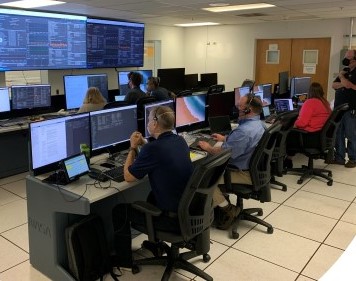
The agent-based OCA Mirroring System (OCAMS), being developed at Ames to automate part of the workload of the International Space Station (ISS) Orbital Communications Adapter (OCA) Officer, has been included as an integral part of a new Concept of Operations written by Johnson Space Center’s OCA team in the Mission Operations Division. Members of the OCA, OCAMS, and Mission Support teams have also defined a certification process to follow, and a number of meetings have been scheduled with boards and organizations at JSC.

OCAMS researchers recently completed a successful integration test week at Ames, with very positive responses from OCA and Mission Support representatives. One obstacle to deploying OCAMS in Mission Control has been the need for secure communications between agents and the completely isolated OCS network. To address these concerns, a Secure Communications Layer is being implemented to the Brahms multi-agent language environment, and thus OCAMS. This layer is an adaptation of the “Collaborative Infrastructure” architecture for interoperability that the Brahms team developed in FY07 as part of the Spacecraft Autonomy and Vehicle Health (ETDP 6E) project.

BACKGROUND: The OCA Officer is responsible for uplinking and downlinking all files to and from the ISS. The Ames Mission Operations Design and Analysis Toolkit (MODAT) project team is developing the Agent-based OCA Mirroring System (OCAMS) to simulate the OCA Officer’s work process in order to identify possible process improvements. Using the newly developed Simulation to Implementation Engineering method, the MODAT team developed an in-silico work process and practice simulation of the OCA Officer’s work in Brahms, based on observations of the actual work in Mission Control. Using statistics generated from this simulation model and collaborative design with the OCA Team at JSC, they then developed an agent-based workflow system that supports the newly designed and improved OCA work process.

With the OCAMS system, the time spent by the OCA Officer mirroring files uplinked and downlinked to the Space Station is predicted to go from 6% of their shift time to less than 0.6% of their shift time.

NASA PROGRAM FUNDING: This project is funded as the OCA Mirroring System (OCAMS) ITA 9277 between JSC’s MOD and the Ames Intelligent Systems Division.

**************

Additional ISS Inductive Monitoring System-Based System Health Monitoring Capability
The Inductive Monitoring System (IMS) project has begun development of an IMS-based system health monitoring capability for the International Space Station (ISS) External Thermal Control System (ETCS). This application will be deployed on the Thermal Operations and Resources (THOR) mission control console in the ISS flight control room when completed later this year.

Early January 2008 meetings with ISS flight controllers from several disciplines (Communications and Tracking Office, Environmental Control and Life Support System, and THOR) also identified several other potential IMS monitoring applications the team plans to investigate.

BACKGROUND: IMS is currently in service on ISS mission control consoles in the Johnson Space Center (JSC) Mission Operations Directorate (MOD). IMS has been trained to detect faults in the ISS Control Moment Gyroscope (CMG) systems. IMS enables efficient, low-cost production of an advanced system health monitoring capability. It also allows monitoring of complex systems that may be too difficult to characterize using conventional techniques. Rapid resolution of anomalies avoids loss of life or property in critical situations.

NASA PROGRAM FUNDING: ESMD, Constellation Mission Operations Project

**************

STAR Team Meets Same-Day Congressional Request for Hubble Servicing Mission Data
In July 2006, the Ames Scheduling, Training Administration, and Records (STAR) team took over support for Johnson Space Center/Mission Operation Directorate’s (MOD) Training Administration and Management System (TAMS). On January 17th, 2008, the Ames team was notified that Congress was interested in comparing the training of the upcoming Hubble Servicing mission to the training of other previous Hubble Shuttle Mission crews. The information for STS-82 was requested mid-day and had a deadline of the same day to provide the MOD team sufficient time to perform their analysis for Congress. This data was more than 10 years old and had been archived off the TAMS system well before the transfer of responsibility. The MOD team making the request did not expect that the Ames STAR team would be able to retrieve this information based on the time provided. For several hours, a small group worked diligently and was able to retrieve the information to prepare a more complete report to Congress. The undocumented procedure for retrieving this data was developed in real time as the team worked the activity. The work was performed by Quit Nguyen, Mei Wei, and May Windrem of the Ames STAR team with support from Pablo Chavez of United Space Alliance of JSC and Corey McGuire of ARC-TI Systems Group.

NASA PROGRAM FUNDING: The STAR project is an MOD-funded effort to develop the next-generation training management system for MOD for training of Astronauts, Flight Controllers, and Instructors. It is funded jointly by Space Shuttle, Space Station, and Constellation Mission Operations Programs.

**************

Solar Array Constraints Engine in the News
The joint effort on the part of NASA Ames Research Center and NASA Johnson Space Center (JSC) to manage the International Space Station (ISS) solar arrays was written up in the Information and Logistics section of Aerospace America’s 2007 Year-in-Review issue. The article, prepared by the AIAA Intelligent Systems Technical Committee, also described a highly successful demonstration of autonomy for robotic site survey, using a plan written in the Plan Execution Interchange Language (PLEXIL, developed as a collaboration among NASA Ames, JPL, and Carnegie Mellon University).

BACKGROUND: As the International Space Station (ISS) nears completion, assessing the safety of different configurations of the solar panels has become a challenging task, requiring the analysis of constraints from many different sources (power, thermal, load, and environmental). As a result of this new challenge, a team from NASA Ames, JSC, and United Space Alliance created the solar array constraint engine (SACE) for use by station power, heating, articulation, and lighting control officers. SACE employs constraint reasoning and automated planning technology to determine the safety of the current configuration of ISS solar panels, assess the impact of future configurations, and create long-range solar panel plans that maximize safety.

NASA PROGRAM FUNDING: This work was funded by the NASA Exploration Technology Development Program and the Space Operations Mission Directorate.

TEAM MEMBERS: Sudhakar Reddy, Matthew Boyce, Michael Iatauro, Elif Kurklu, Mitch Ai Chang

**************

Prognostics for Critical Avionics Review
Representatives from Impact Technologies visited Ames for a review of the joint Innovative Partnerships Program (IPP) project on Prognostics for Critical Avionics. The project centered around how to recognize degradation in power semiconductor components commonly used in avionic equipment. To that end, the semiconductor components were aged in controlled environments. It was found that certain characteristics change with increased degradation, such as more damped ringing characteristics and an increase of gate voltage during the off phase of the component. In conjunction with post-mortem X-rays performed at the University of Maryland, it was hypothesized that these changes are indicative of hot carrier effects.

BACKGROUND: Avionics systems play an ever-increasing critical role in on-board, autonomous functions for vehicle controls, communications, navigation, and radar systems. The application of IVHM to avionics systems will boost in-flight performance, reduce maintenance costs, and ultimately improve aircraft reliability. Flight and ground crews require health state awareness and prediction technologies that can accurately diagnose faults, anticipate failures, and predict the remaining life of these embedded electronics.

NASA PROGRAM FUNDING: NASA IPP

COLLABORATORS: Greg Sonnenfeld (MCT), Jose Celaya (RIACS), Patrick Kalgren, Antonio Ginart, Vincent Capra (Impact Technologies, Inc)

**************

Ares I Flight Dynamics Presentation to Ares GN&C Panel
On January 14, a team led by Serdar Uckun presented preliminary findings on Ares I flight dynamics under various solid rocket motor (SRM) field joint leak scenarios to the Ares Guidance, Navigation, and Control (GN&C) Panel. In a separate meeting, the team presented these findings to Tom Williams, Ares First Stage Deputy Element Manager. The analysis combines a physics model of case defect growth with a flight dynamics model of Ares I (based on Marshall Space Flight Center’s MAVERIC simulation tool), modified to incorporate a side thrust due to the field joint leak. Preliminary analysis results suggest that field joint leaks evolve relatively slowly and that the launch vehicle remains controllable for a sufficiently long time to permit detection and validation of the fault, prediction of the outcome, and safe initiation of an abort if necessary. The preliminary study also suggests that legacy reusable solid rocket motor (RSRM) health and GN&C sensors may be adequate for detection and prediction of these faults (although a faster sampling rate may be required for timely detection and prediction).

BACKGROUND: The Solid Rocket Motor Health Management (SRM HM) is focusing on physics-based methods to understand and analyze SRM failure modes and to develop methods to detect and predict catastrophic failures of SRMs. Last year, the project concentrated on case breach failures. This year, the project is focusing on detection and prediction of field joint leaks. Note that an RSRM field joint leak was the root cause of the Challenger accident. While the RSRM field joints have been redesigned and made safer since then, field joint leak is still a credible fault mode for Ares I.

NASA PROGRAM FUNDING: Exploration Technology Development Program - Integrated Systems Health Management Project

**************

OCA Mirroring System to be Installed at ISS Mission Control
In a meeting with Brian Anderson (Chief Engineer, Mission Operations Directorate) and Tim Hall of Johnson Space Center (JSC), it was decided that the OCA Mirroring System (OCAMS) will be installed for operations in the International Space Station (ISS) Mission Control Center (MCC) by the end of the first quarter of 2008. With the OCAMS system, the time spent by the Orbital Communications Adapter (OCA) Officer mirroring files uplinked and downlinked to the Space Station is predicted to go from 6% of their shift time to less than 0.6% of their shift time.

BACKGROUND: The Ames Mission Operations Design and Analysis Toolkit (MODAT) project team is developing the Agent-based OCA Mirroring System (OCAMS) with the Brahms multi-agent language developed in the Work Systems Design and Evaluation group. Using the newly developed Simulation to Implementation Engineering method, the MODAT team developed an in-silico work process and practice simulation of the OCA Officer’s work in the Brahms environment, based on observations of the actual work in Mission Control. Based on statistics generated from this simulation model and collaborative design with the OCA Team at JSC, they designed an agent-based workflow system that supports the newly designed and improved OCA work process. This design was then implemented as a second in-silico simulation model in Brahms. The second simulation was validated against the same data set as the first, and a 10-fault time improvement of the OCA mirroring function was predicted. Based on these results, the OCAMS agent-based simulation model has been turned into a distributed agent-based workflow system that will now be tested and implemented in operations in the MCC at JSC.

NASA PROGRAM FUNDING: This project is funded as the OCA Mirroring System (OCAMS) ITA 9277 between JSC’s MOD and the Ames Intelligent Systems Division.

**************

Space Autonomy Article Published
“Autonomy in Space: Current Capabilities and Future Challenges,” by Ari Jonsson, Robert A. Morris, and Liam Pedersen, has been published in the Winter 2007 issue of AI Magazine. The article surveyed of the use of AI technology developed at Ames and elsewhere used for making space exploration systems more autonomous.

NASA PROGRAM FUNDING: Intelligent Systems Division

**************

"DARK NAVIGATION" SYSTEM TESTED
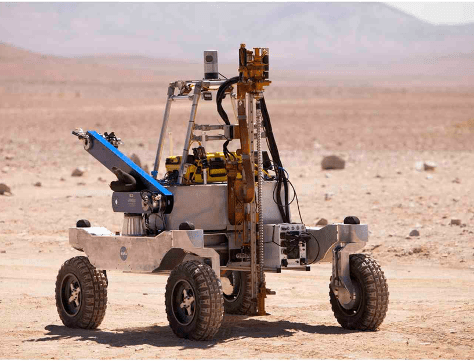
The Ames Intelligent Robotics Group tested a system for "dark navigation" as part of a demonstration of the Carnegie Mellon University (CMU) "Scarab" robot on December 13 and 14. The ability to safely navigate in unstructured, natural terrain without ambient illumination is an important capability for lunar exploration systems. In particular, robotic exploration in permanently shadowed zones (e.g., within polar craters) requires obstacle detection and collision avoidance to be performed even in the absence of sunlight. The ARC DarkNav system uses multiple laser beams to help Scarab operate in complete darkness. Scarab is a prototype of a robot that could prospect and drill for resources in the lunar soil.

PROGRAM FUNDING: ESMD Exploration Technology Development Program

POC: Terry Fong

**************

SPACE ACT AGREEMENT MEETING WITH BOEING

A group of researchers from Boeing Phantom Works visited Ames Research Center on December 4 to inform the Discovery and Systems Health Technical Area members about their current work in the areas of diagnostics, prognostics, and air and spacecraft systems analysis & integration, and to discuss the renewal of the existing Space Act Agreement (SAA) between Boeing Phantom Works and Ames Research Center.

Over 20 code TI researchers representing different groups of the Discovery and Systems Health Technical Area participated in the day-long activities. The Boeing Phantom Works team presented the Boeing IVHM research focus, laboratories, and future plans; ARC personnel presented an ARMD IVHM project update, the new IVHM Advanced Analytics Testbed, and ongoing research in the Advanced Diagnostics and Prognostics Testbed (ADAPT). Several research areas were discussed, including Bayesian networks, data-driven diagnostic applications such as the Inductive Monitoring System (IMS), model-based reasoning tools such as the Hybrid Diagnostic Engine (HyDE), Verification and Validation (V&V) of IVHM technologies, and prognostic methods in IVHM encompassing research on battery, electromechanical actuator, and electronics prognostics. The visit concluded with the review of future plans between the two organizations and the identification of several new potential collaboration directions to be included in the Space Act Agreement.

BACKGROUND: The Space Act Agreement has the purpose of developing health management methodologies, techniques, and systems for aircraft and spacecraft. The activities to date include the exchange of IVHM models, methodologies, and expertise in selected research areas. Technologies investigated to date include functional failure analysis modeling, IVHM system optimization, IVHM cost-benefit analysis, and IVHM tools and integration frameworks.

PROGRAM FUNDING: ARMD Aviation Safety Program, IVHM Project

POC: Tolga Kurtolgu

**************

Intelligent Systems Division

Technical Research Areas

Autonomous Systems and Robotics
Development of technologies required for systems that can adapt their behavior to complex, rapidly changing environments
+ Visit ASR

Collaborative & Assistant Systems
Information technologies and collaboration tools that facilitate the specialized work of distributed teams in NASA mission settings
+ Visit CAS

Discovery and Systems Health
Tools and methods for systems health management; large-scale science and aeronautical data analysis and data mining
+ Visit DaSH

Robust Software Engineering
Increased software quality, reliability, and productivity through research done in the context of NASA applications
+ Visit RSE

Highlights

OCAMS Project Moves Toward Deployment in JSC Mission Control
Integral part of a new Concept of Operations written by the OCA team, with certification process defined
+ Read More

STAR Team Meets Same-Day Request for Hubble Servicing Mission Data
Congress requested STS-82 data that was more than 10 years old and had been archived offline
+ Read More

Aviation Safety Program Appointments
Kalmanje Krishnakumar, Nhan Nguyen, and Robert Mah have been named to leadership positions in the Aviation Safety Program
+ Read More

CMMI Pre-assessment of Selected Software Engineering Projects
The pre-appraisal evaluated the current state of division software engineering processes in relation to the CMMI model, to identify areas of strength and areas for improvement
+ Read More

LCROSS Mission and Science Operations at Ames
The lunar impactor mission will search for the presence of water at the Moon's south pole
+ Read More


+ View News Archive

Mission Technologies

+ Space Technology 5
+ Mars Exploration Rovers
+ Earth Observing 1
+ Phoenix Mars Lander
+ LCROSS
+ Mars Science Laboratory

Featured Projects

+ Crewed NEO Mission Feasibility Study
+ Haughton Crater Field Test
+ Planetary Content
+ Spaceflight Training Management

Events

ICSE Leipzig 2008
Location: Leipsig, Germany
Date: 05-10-2008
Time: 08:00 am

ECAI 2008
Location: Patras, Greece
Date: 07-21-2008
Time: 08:00 am

PHM'08
Location: Denver, CO
Date: 10-06-2008
Time: 08:00 am